.png)
Pest Profile: Cockroaches
Cockroaches are famous for being incredibly resilient. Once they take hold in a house, they are extremely difficult to get rid of. Many different species have been known to infest houses, including German cockroaches, American cockroaches, and Oriental cockroaches.
Last Updated: March 27, 2026
Quick Facts about Cockroaches
Physical Identification of a Cockroach
Correctly identifying the cockroach species is the first step toward effective treatment because the different species occupy different harborage zones and respond to different treatment approaches.
✔ German Cockroach — small (1.3–1.6 cm) with two dark tan-brown parallel stripes behind the head. Most common indoor species; prefers kitchens and bathrooms. This species cannot survive outdoors in Canada.
✔ American Cockroach — large (3.5–4 cm) with reddish-brown and yellowish figure-8 pattern on thorax. They are also called 'palmetto bug' found in basements, drains, and sewers.
✔ Oriental Cockroach — medium (2–2.5 cm) with a very dark brown to black and greasy appearance. They prefer cool and damp areas such as basements, drains, and crawl spaces producing strong musty odour.
✔ Brown-Banded Cockroach — small (1.3 cm) with two pale light-brown bands across wings. They are unusual due to their preference of warm, dry, elevated locations. They are usually found in bedrooms and living areas.
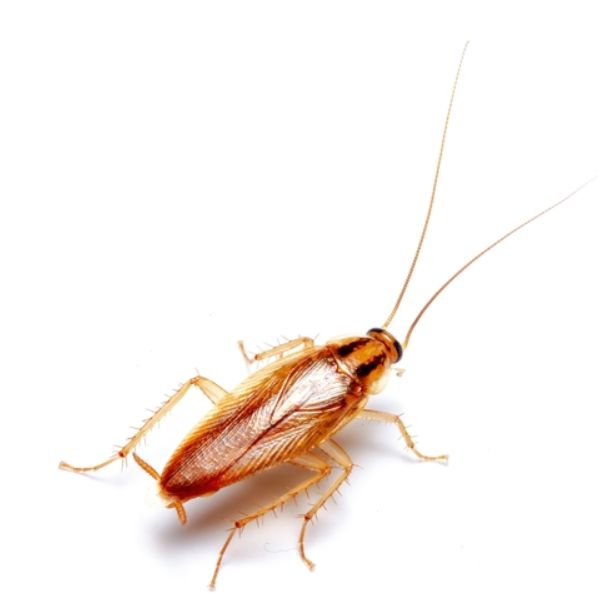
Image: German Cockroach
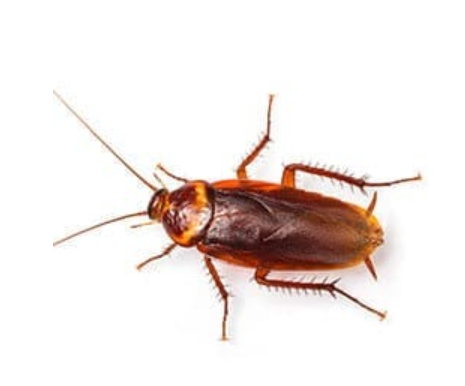
Image: American Cockroach
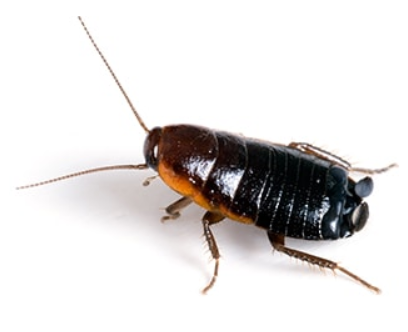
Image: Oriental Cockroach

Image: Brown-Banded Cockroach
Daytime Sighting = Serious Infestation: Cockroaches are strongly photophobic meaning they have an abnormal and painful sensitivity to light so they avoid it. If you are seeing cockroaches during daylight hours, the harborage site is so overcrowded that weaker individuals are being pushed out. A single daytime sighting typically indicates hundreds to thousands more in hiding.
Cockroach Behaviour & Biology
Cockroaches are among the most biologically successful insects on Earth. Their behavioural adaptations make them exceptionally difficult to eliminate without professional intervention.
- Nocturnal & Thigmotactic Behaviour: Cockroaches are active at night and strongly thigmotactic meaning that they prefer to be in tight contact with surfaces on multiple sides simultaneously. This is why they inhabit cracks, gaps behind appliances, and inside wall voids. These harborage sites are the primary treatment target.
- Rapid Breeding & Resistance Development: The German cockroach is the fastest-breeding urban pest insect in the world. A single mated female can theoretically produce 30,000 descendants in one year. Populations also develop resistance to insecticides with remarkable speed with studies have documented resistance emerging in as little as a single generation (about 3 months).
- Aggregation Pheromones: Cockroaches produce aggregation pheromones in their feces that actively attract other cockroaches to the same location. This is why infestations concentrate in specific harborage zones and why thorough cleaning after treatment is essential because the residual pheromones continue to attract new insects.
- Dietary Flexibility: Cockroaches are among the least fussy eaters in the animal kingdom. They consume food, grease, starch, glue, book bindings, wallpaper paste, soap, leather, hair, dead skin cells, and each other. This extreme dietary flexibility means food source elimination alone is insufficient to control an established infestation.
- Moisture Dependence: Cockroaches require regular access to water and will die from dehydration within a week under dry conditions. German cockroaches rarely travel more than 3–4 metres from a water source. Moisture control (fixing leaks and reducing condensation) is a critical component of any cockroach management program.
- Cannibalism & Internal Resistance Transfer: Under crowded conditions cockroaches cannibalize each other, including egg cases. This behaviour allows pesticide resistance traits to spread within the population even to individuals with no direct insecticide exposure. It is one of the mechanisms that makes German cockroach control particularly challenging.
Cockroach Diet & What Attracts Them
Understanding what draws cockroaches into a space is critical for both treatment and long-term prevention.
Second-Hand Appliances: The #1 Introduction Route that German cockroaches most commonly enter homes via infested second-hand appliances (microwaves, toasters, coffee makers), grocery bags and cardboard boxes from infested warehouses, and moving boxes from infested properties. Always inspect used appliances thoroughly before bringing them indoors. Cardboard boxes from storage or moving should not be kept inside longer than necessary.
Cockroach Reproduction & Life Cycle
The cockroach's reproductive biology is the primary reason infestations escalate so quickly and why partial treatments almost always fail.Understanding what draws cockroaches into a space is critical for both treatment and long-term prevention.
- The Ootheca (Egg Case): Cockroach eggs are not laid individually instead they are encased in a hardened protein capsule called an ootheca. A German cockroach ootheca contains 30–48 eggs and is carried by the female until just before hatching. The casing protects eggs from many surface-applied insecticides which is why residual treatment must remain active long enough to kill hatching nymphs.
- Explosive Reproductive Rate: The German cockroach has the fastest reproduction rate of any urban pest cockroach. Under optimal conditions, a single female produces 4–6 oothecae containing up to 48 eggs each, with a generation time of approximately 60–100 days. Populations can double in under 2 months. American and Oriental cockroaches breed more slowly but live significantly longer.
- Incomplete Metamorphosis (Hemimetabolism): Cockroaches undergo incomplete metamorphosis as there is no pupal stage. Nymphs hatch from the ootheca looking like miniature adults and immediately begin feeding and competing for resources. Nymphs go through 5–7 moults over several weeks before reaching adulthood. Each instar (stage) is progressively larger and harder to treat.
- Insecticide Resistance Inheritance: Resistance traits are inherited and accumulate across generations. Populations exposed to a single insecticide class can develop broad cross-resistance to multiple chemical families within months. This is why our treatment program uses a rotation of chemical classes and mode-of-action combinations rather than a single product.
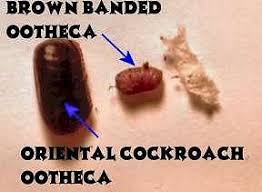
Image: Cockroach Ootheca (Egg Case)
Cockroach Health Risks & Disease Transmission
Cockroaches are among the most significant insect disease vectors in urban environments. Their health impact extends well beyond contamination of food surfaces.
⚠ Salmonella & E. coli — Cockroaches pick up bacteria on their legs and bodies while crawling through sewers, drains, and garbage. They mechanically transfer pathogens to food preparation surfaces, dishes, and cutlery. Cockroach-contaminated food is a known source of Salmonella typhi (typhoid), S. typhimurium, and multiple E. coli strains.
⚠ Allergens & Asthma Triggers — Cockroach feces, shed exoskeletons (cast skins), saliva, and body parts are potent allergens. In urban areas, cockroach allergen is a leading trigger of asthma attacks, particularly in children. Studies have found cockroach allergen in over 63% of urban homes often persisting long after the infestation is eliminated.
⚠ Gastroenteritis & Food Poisoning — Multiple studies have directly linked cockroach infestations to increased rates of food-borne illness in buildings. The organisms cockroaches carry include Staphylococcus aureus, Streptococcus, Pseudomonas aeruginosa, and various enterobacteria with all of them capable of causing serious gastrointestinal illness.
⚠ Dysentery & Cholera (Historically) — Cockroaches have been implicated in the mechanical transmission of dysentery-causing bacteria (Shigella dysenteriae) and have been shown in laboratory conditions to carry Vibrio cholerae (cholera). In developed nations the risk is low, but cockroach control in food service settings is a critical public health measure.
⚠ Parasites — Cockroaches can carry and transmit the eggs of parasitic worms including Ascaris (roundworm), Trichuris (whipworm), and pinworms. These are deposited on food surfaces and consumed inadvertently, causing intestinal parasitic infections.
⚠ Psychological Impact — Research consistently documents elevated anxiety, stress, and sleep disruption in residents of cockroach-infested homes. The psychological burden of infestation is a recognized health impact, particularly in multi-unit housing.
Signs of Cockroach Activity
Early detection dramatically simplifies treatment. The following signs indicate an active infestation, often before cockroaches are seen directly:
✔ Droppings — dark, pepper-like specks (German) or cylindrical brown pellets (American/Oriental) along wall junctions, inside cabinets, and behind appliances.
✔ Egg cases (oothecae) — small, brown, capsule-shaped casings glued to surfaces in concealed areas such as under appliances, inside cabinet hinges, behind baseboards.
✔ Shed exoskeletons — translucent, hollow nymph skins found near harborage areas indicating an actively breeding population.
✔ Musty or oily odour — a distinctive, unpleasant smell produced by aggregation pheromones and body secretions. The stronger the odour means the larger the population.
✔ Grease smear marks — dark and irregular smear trails along wall junctions and baseboards where cockroaches regularly travel.
✔ Chewed food packaging — gnaw damage to cardboard, paper bags, and food containers in pantries and cupboards.
✔ Live cockroaches at night — turning on a kitchen light at night and seeing cockroaches scatter is a reliable indicator of an established cockroach infestation.
✔ Daytime sightings — the most urgent sign which indicates extreme overcrowding and a very large population.
Why Professional Treatment Is Essential
Cockroaches are the pest most commonly underestimated by homeowners and most commonly undertreated by DIY methods. Here is why professional intervention consistently outperforms over-the-counter approaches:
- Over-the-counter sprays: They kill on contact but have no residual effect on hidden populations. The sprays can also trigger scatter behaviour spreading the infestation to new areas.
- Cockroach bombs ('foggers'): They do not penetrate the cracks and crevices where cockroaches live. There are studies that show foggers are largely ineffective against German cockroaches.
- Resistance: populations already exposed to common pyrethroid sprays (the main class used in consumer products) frequently show near-complete resistance
- Egg case immunity: most surface treatments cannot penetrate oothecae. The hatching nymphs emerge into an untreated environment and the population rebounds within weeks
- Source identification: professional treatment targets the harborage zones and introduction points, not just visible individuals
- Product access: professional-grade gel baits, insect growth regulators (IGRs), and residual insecticides are significantly more effective than consumer products and are not available without a licence
Our licensed technicians identify the species and map all harborage zones, apply a combination of Health Canada-registered and approved residual sprays, gel baits, and insect growth regulators (IGRs) to all target areas, and schedule a follow-up inspection.
Get Rid of Your Pests Today!
Do you have a pest problem that needs to be looked at right away? Contact Guard More Pest Control about your pests and we'll work on solving your pest problem within 24 hours.